
Storm Amy left most of Duxford’s Flying Finale grounded, with just three aircraft taking to the skies — leaving some visitors questioning whether the day justified the cost.
Low cloud and strong winds hung over the airfield as visitors gathered for what had been billed as the crowning flying display of the season.
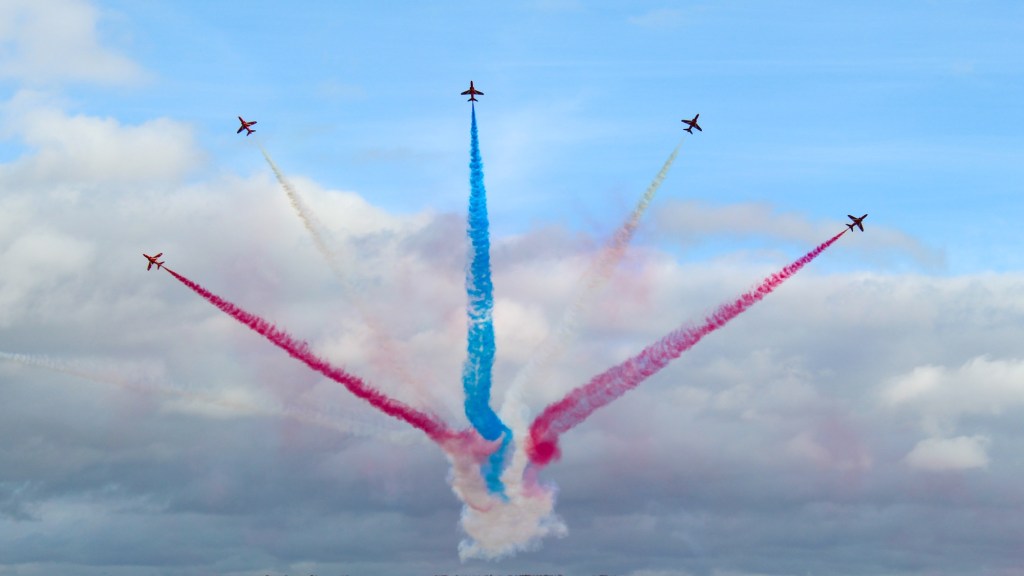
The Red Arrows delivered their trademark precision at Duxford’s Flying Finale on 4 October 2025, one of only three aircraft displays to beat Storm Amy.
The Imperial War Museums site at IWM Duxford is known for its historic aircraft and seasonal flying days, and the Flying Finale was billed as the crowning event of the 2025 season. Ten displays were promised. Instead, under the grip of Storm Amy, only three types of aircraft made it into the air: the Catalina flying boat, a Eurofighter Typhoon and the Red Arrows.
Safety rightly comes first, but the decision to push ahead left many visitors questioning the value for money. Two tickets alone cost £80 and, with food, drinks and the extra charge to board static commercial aircraft, the day easily topped £140. For just three flying displays spread across seven hours, that felt steep.
Communication compounded the problem. Staff were unable to confirm when flying might begin and even the standard 1pm to 4pm flying window went unmentioned. Announcements struggled to carry across the windy airfield and promised social media updates never materialised. Even a short briefing explaining which aircraft were grounded and why might have helped visitors understand the disruption.
When aircraft did take to the skies, the flying itself was impressive. The Catalina was a rare sight, gliding slowly above the airfield with unmistakable wartime elegance. The Eurofighter Typhoon delivered the thunder and speed expected from modern combat aircraft. Then came the Royal Air Force Red Arrows, flying eight jets in their unmistakable formation and bringing the precision and spectacle that has made them one of Britain’s most recognisable display teams.
Together they provided memorable moments. Yet with only three displays across an entire day, the long gaps between flights left the programme feeling sparse.
On the ground, period actors added colour and enthusiasm, but the exhibitions struggled to absorb the crowds sheltering from the weather. Catering queues stretched long and covered spaces quickly filled. Families searching for ways to pass the downtime found little beyond the static displays and museum hangars.
Long-time enthusiasts online suggested they too left disappointed. User G67 on forums.airshows.co.uk wrote that “even a credit of the difference show price and the museum price would have been a gesture of contrition, might have sweetened the sour mood in the crowd.” The comment hinted that it was not just casual visitors who felt short-changed.
Events like these require immense preparation and organisers cannot control the weather. But customer experience cannot be an afterthought. Duxford remains a world-class aviation museum, yet this finale risked eroding goodwill among visitors who expected far more from the season’s headline flying day.
Unless organisers improve communication and visitor care when events are disrupted, occasional audiences may think twice before returning.
 Colin Cushion
Leave a comment