
Spoiler note: This review discusses key moments in The Producers.
Never, in all the years and all the shows I have seen, has a piece of theatre made me freeze. My face dropped. I understood exactly what the show was doing in that moment, aware of the irony of an audience being swept along by the comedy. I have kept returning to that reaction, wondering how many others felt it too, and how many simply moved on.
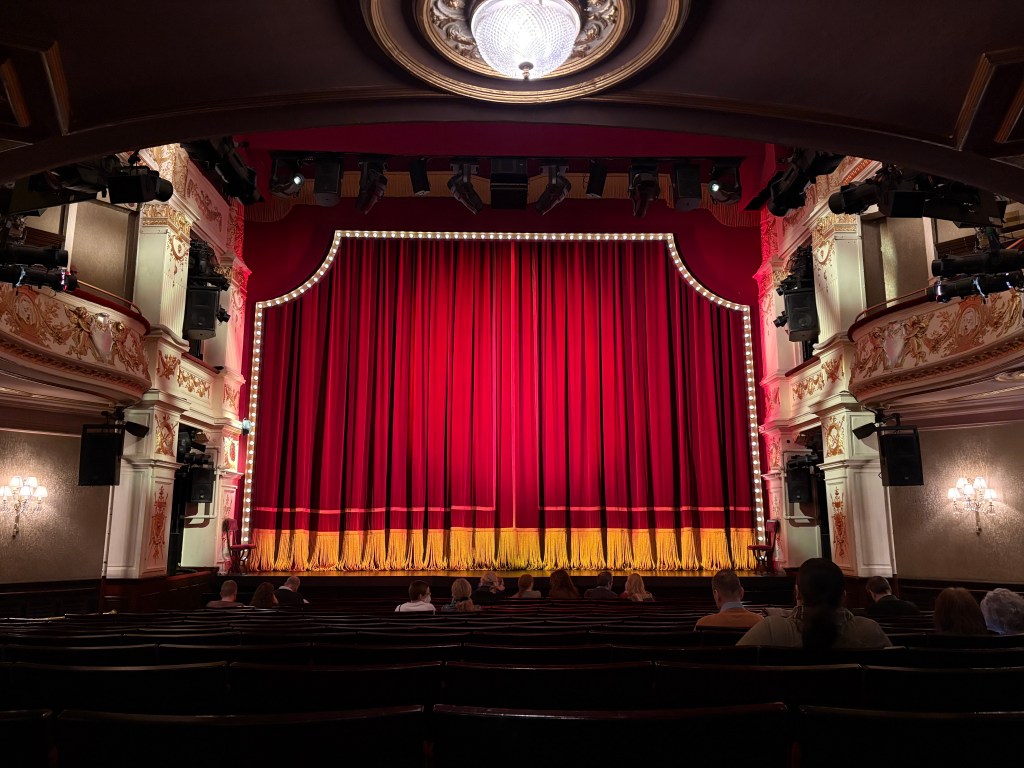
The Producers at the Garrick Theatre, transferred from the Menier Chocolate Factory and directed by Patrick Marber, is explosive. The production barely seems able to fit on the stage, yet that compression sharpens its effect. It is chintz, camp and outrageously funny, but also pointed. The show invites you to go along with an extortion plot, to become complicit in the production of something so deliberately abhorrent that it is destined to succeed.
There is a risk in trying to make sense of it too early. The show relies on momentum before meaning. Apply the brakes too soon and you miss not only the joke, but what it is doing to you.
From the outset, nothing is hidden. Motives are clear, mechanisms visible, the fourth wall all but gone. The show does not trick its audience so much as dare them to keep up.
Scott Pask’s set provides just enough structure to contain the chaos. Lorin Latarro’s choreography is precise and relentless, working within a space that could barely accommodate it. Paul Farnsworth’s costumes embrace the excess, while Tim Lutkin’s lighting sharpens the rhythm.
Mel Brooks’ book and lyrics sit deliberately on the edge of absurdity. The characters are shallow by design, and you are not meant to like them. The production overwhelms with comedy, leaving little room to question what is happening until it has already happened.
The ensemble sustains that pace, shifting between roles and preventing the production from collapsing under its own weight.
Act One barrels forward. Act Two slows, pulling the story back into focus. That shift is necessary, but it briefly disrupts the rhythm. The production anticipates this and recovers.
Everything builds towards Springtime for Hitler.
In that moment, the mechanism becomes clear. Not shock, but recognition. Comedy turns the unacceptable into spectacle. Add enough momentum and anything can become palatable. The laughter is sustained and encouraged. That response is not incidental. It is the point.
In the current political climate, that lands with force. Where Cabaret confronts its audience directly, The Producers disarms through laughter. It does not warn. It implicates.
The score does not linger. What remains is disruption. Even the orchestra folds into the spectacle, briefly indistinguishable from recorded sound before revealing itself as part of the illusion. Memory is not tied to pleasure, but to the moment you realise what you have been laughing at.
This revival is technically assured and confident. More importantly, it understands exactly how it operates. It invites complicity, delivers spectacle and lets laughter do the work.
What remains is an unsettling clarity.
Comedy can make almost anything palatable.
The Producers knows this, exploits it, and leaves you to decide what to do with that knowledge.
 Colin Cushion
Leave a comment