
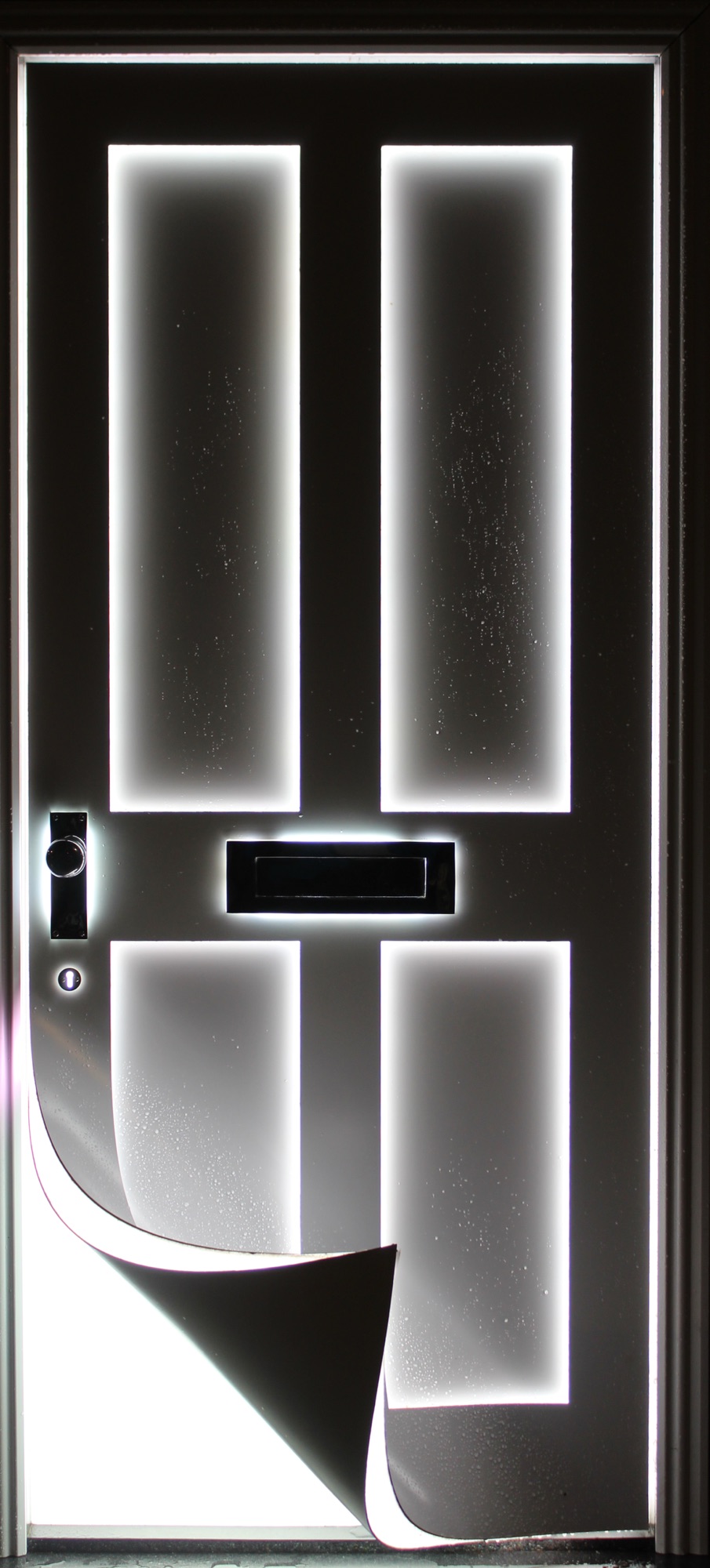
Winter Lights at Canary Wharf promises a rare kind of public art experience. Large scale installations, open access, and the chance to move through the city at night with purpose.
In previous years, it has delivered moments of genuine intrigue. This year, something else took over.
The rain came.
What followed was a mix of umbrellas, congestion and a refusal to share space that made the event difficult to navigate. Umbrella blindness set in quickly. People stopped rather than get wet. Others pushed forward as if the experience might disappear if they were not first.
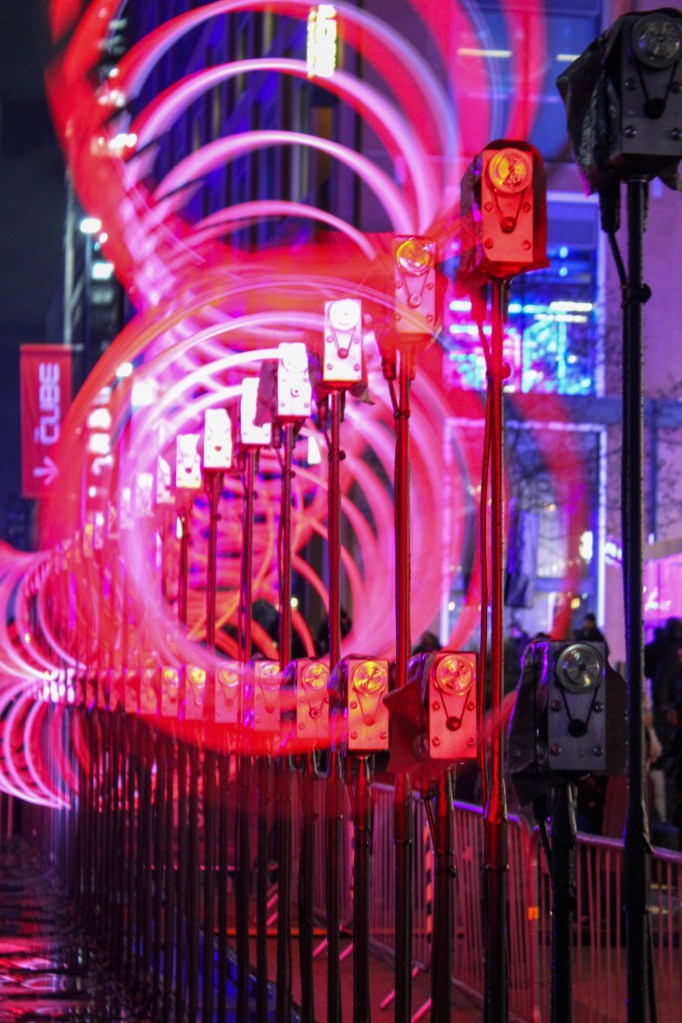
Scale
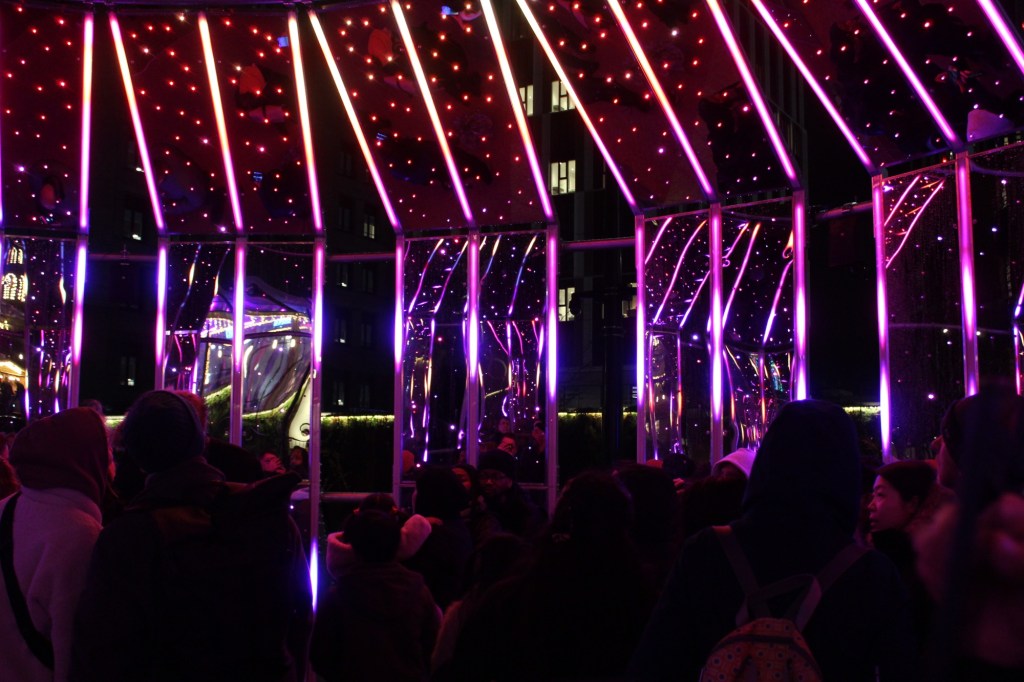
It became difficult to follow the suggested route. Installations that demanded pause and distance were swallowed by a crowd that never stopped moving. Work designed to breathe was reduced to something to pass through.
There were still moments of brilliance. FloWeЯ PoWeЯ by Aerosculpture, Jean-Pierre David and Christian Thellier, Aether by Architecture Social Club, and Sanctuary by Ithaca Studio stood out. In the right conditions, they come close to being genuinely moving.
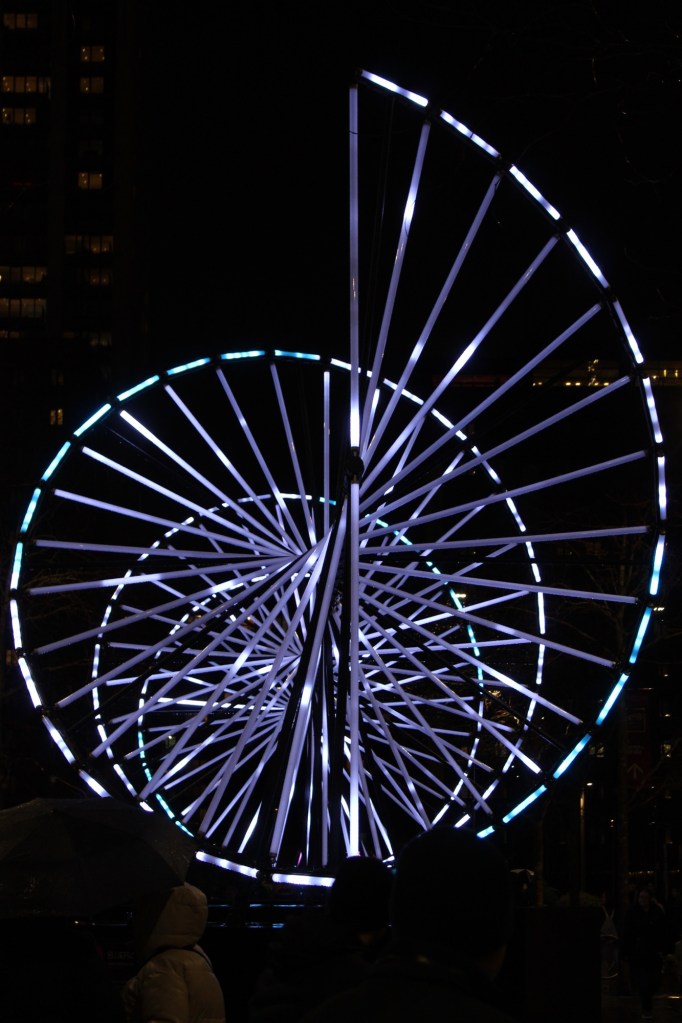
Studio Vertigo
Elsewhere, In Bloom by Kumquat Lab and Lacto Reacto Light by Jack Wimperis offered something more playful. These were moments where interaction felt natural rather than competitive.
The problem is not the work. It is the way it is consumed.
Phones were pushed inches from faces to capture poorly framed selfies. People pressed themselves against kinetic installations, reducing them to backdrops. The experience became less about looking and more about being seen.
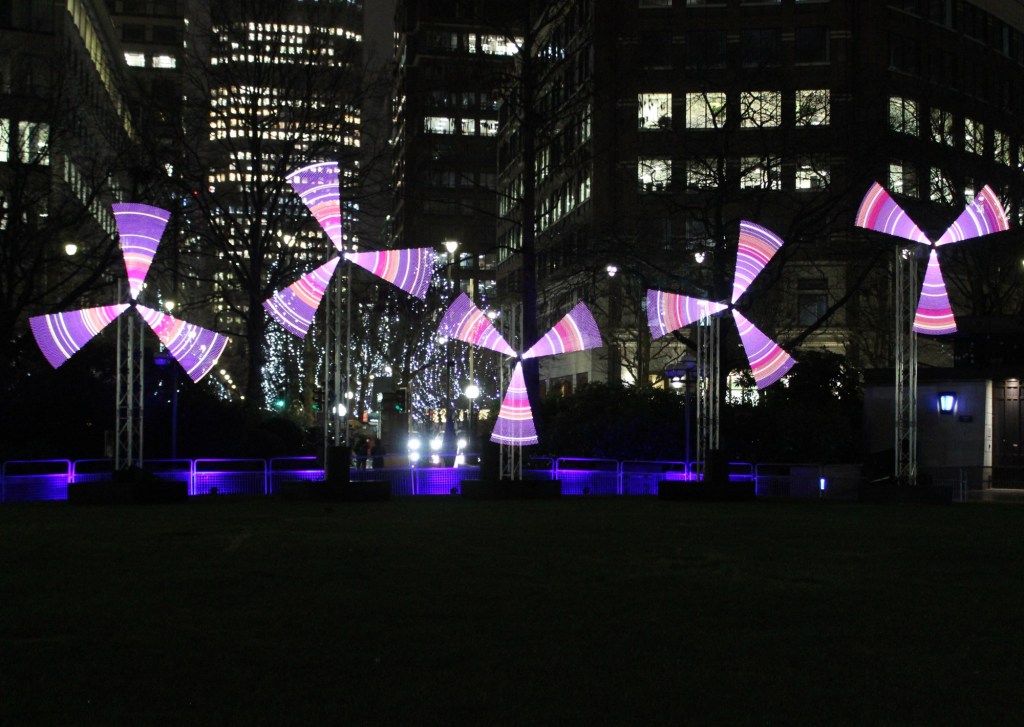
Aerosculpture/ Jean-Pierre David and Christian Thellier
Some pieces also felt overly familiar, echoing ideas explored more effectively in previous editions. That repetition risks dulling the impact. Winter Lights needs to decide what it wants to be: an event producing bold, challenging work that justifies the crowds, or a convenient draw that encourages a steady circuit of the Wharf.
Those two things are not the same.
Ultimately, the evening felt underwhelming. Not because the work lacked quality, but because the conditions made it difficult to experience. Crowds dominated the space, and the combination of weather and behaviour exposed how fragile the event becomes under pressure.
Ithaca Studio
Winter Lights still contains moments of beauty.
But until it addresses who it is for, and how it functions when crowded, those moments risk being drowned out.
 Colin Cushion
Leave a comment