
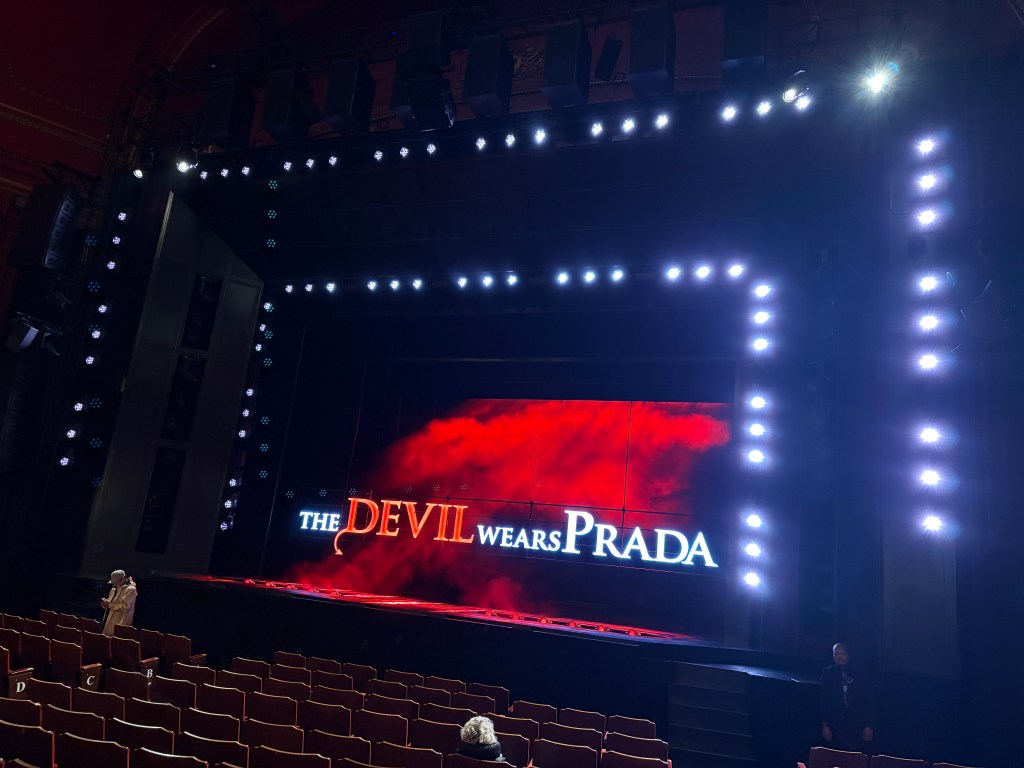
The Devil Wears Prada moves at breakneck speed. It is glossy, confident and unapologetically big. The costumes gleam. The ensemble sounds strong. The energy is infectious. For long stretches, it is easy to be swept up in it.
And I was.
This is a crowd pleaser. A large cast in a large house delivering a polished show. It entertains. It looks expensive. There is clear talent on stage.
There is, however, a moment early on that should stop the world.
The clatter of heels. A sudden hush. The rise of Miranda Priestly. Power announced through stillness.
I remember her rising. I do not remember the entrance.
The world never quite stops for her. It keeps moving.
That instinct defines the evening.
Scenes transition efficiently. Songs push the narrative forward without delay. Structurally, the piece is sound. The score does its job. But musical theatre should do more than move plot. It should deepen it.
Here, numbers feel like transit. Choruses arrive before the emotional premise beneath them has settled. Hooks repeat, but the ideas they are meant to sharpen do not develop. The show moves, but little is allowed to land.
Miranda’s major beats are delivered with recognition rather than reinvention. The audience anticipates them. They arrive, sometimes even sung into place, but rarely reimagined for the stage.
The humour lands, but it does not linger. Jokes arrive, get their laugh and pass through. They are not embedded in character or situation. They do not deepen anything.
As the narrative darkens, the lack of weight becomes harder to ignore. Andy’s choices carry little consequence. Nigel’s missed opportunity barely registers. Miranda’s divorce is mentioned and moved past. Events occur without impact.
Nate, who should represent the human cost of Andy’s ambition, is written without resistance. Watching someone you love change should fracture something real. Here, it does not.
Nigel is given a substantial number, yet it halts momentum without altering trajectory. It adds little and raises no stakes. The betrayal lands as it would have without it.
Even moments that invite theatrical risk are held back. Emily’s accident happens offstage, reported rather than realised. The caution feels deliberate.
And then the ending.
In the film, Miranda’s near-refusal to acknowledge Andy carries weight. Silence does the work. Here, she enters downstage and is quickly lowered out of view. The moment ends before it can settle.
The bows follow with similar restraint. Finales should seal impact. Instead, a forgettable number anchors the curtain call. The show has entertained, but it has not ignited.
None of this is a failure of performance. The cast look and sound assured. Vanessa Williams commands attention, even when the material limits her. The company deliver what is asked.
The Devil Wears Prada understands the allure of power, status and ambition. What it never fully embraces is their cost.
The production is polished, entertaining and consistently watchable. But whenever it approaches genuine consequence, it pulls away.
The gloss remains.
The danger does not.
 Colin Cushion
Leave a comment