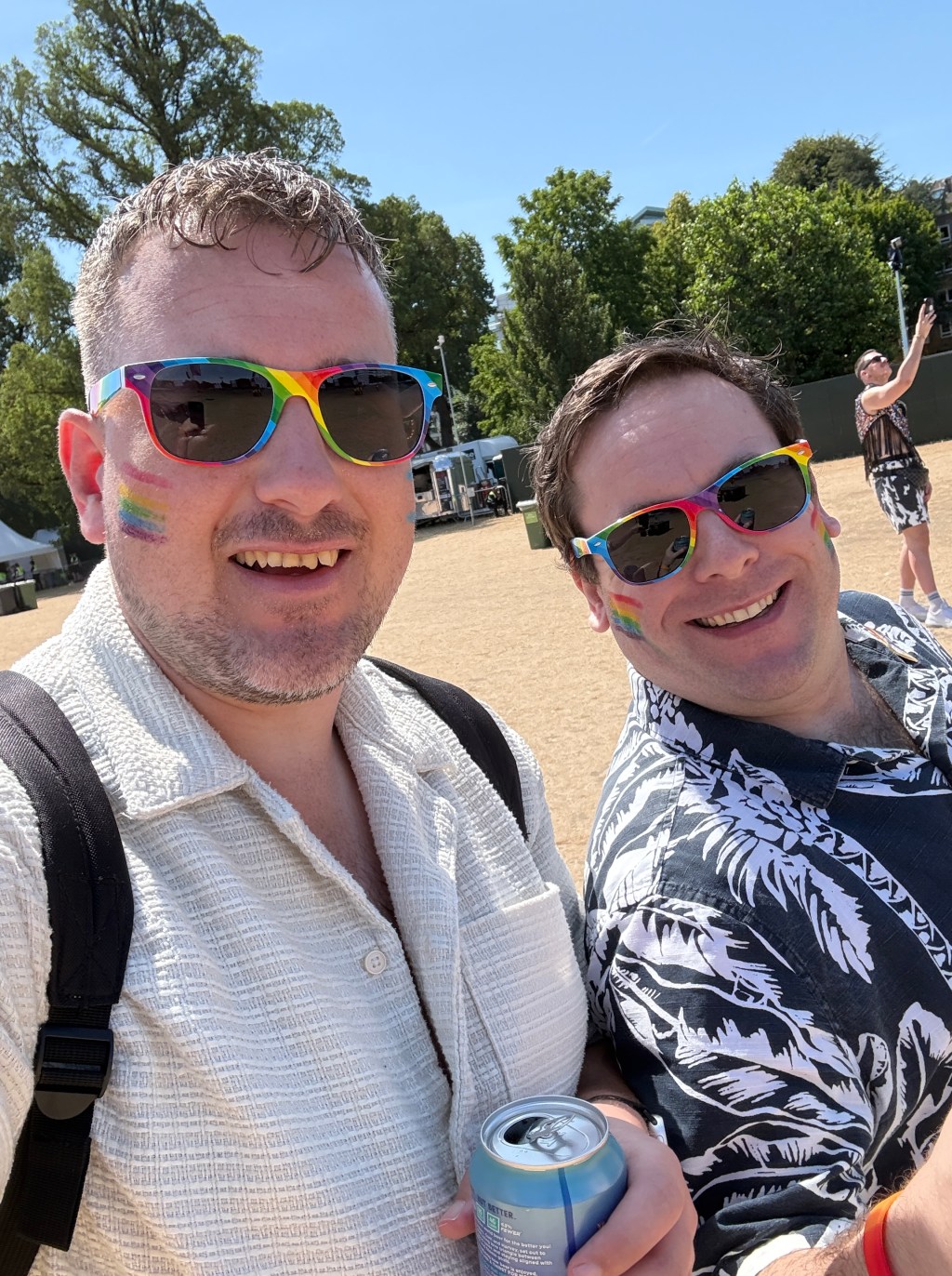
A Great Weekend
We had the best time at Brighton Pride.
We didn’t stay for RAYE or Diana Ross. We’d have loved to have done so, but after two long days in Preston Park we chose to leave while the atmosphere still suited us. As the headline acts draw closer, Pride on the Park begins to feel noticeably busier and the character of the event changes. Leaving when we did meant we finished the weekend on a high, having adored performances from Jessie J, Holly Johnson, Self Esteem, Melanie C on the decks and countless other artists across the weekend.
That isn’t a criticism of the event or the audience. It’s simply a reflection of our own experience and preferences. Festivals are subjective, just as Pride itself is. For plenty of people, the headline acts are the entire reason for attending, and there’s absolutely nothing wrong with that.
We’ve done the whole VIP experience before, spending an entire day standing in one spot waiting for Kylie. It was hideous. We stayed the course, only to be manhandled by two people determined to get as close to the stage as possible. Security eventually dragged one of them over the barrier while we grumpily settled somewhere in the middle of the crowd for the rest of her set.
Between the Performances
For most of both days, Pride on the Park was thoroughly enjoyable. But once the excitement settled and finding shade became the priority rather than chasing the next act, our experience began to change. The adrenaline wore off and, during those quieter moments, the festival itself had to do more of the heavy lifting.
The practical frustrations were obvious enough: very little shade, lukewarm drinking water, expensive food and drink, and lengthy queues for toilets and bars as the site filled up. Festivals are never cheap, and queues are hardly unusual, but when you’re spending long stretches waiting or sheltering from the sun, you inevitably begin to notice the space around you.
And that’s where the spaces between the performances became just as important as the performances themselves.
The Spaces That Stood Out
Queer Town was easily one of the highlights of the weekend. Tucked beneath the trees, with some of the only remaining patches of grass, it offered brilliant performances, one standout being Billie Gold. An entrance arch, a couple of inflatable set pieces and enough personality made it feel like a destination rather than simply another stage. It was one of the few areas of the park with a real sense of identity, and somewhere we found ourselves returning to throughout the weekend.
The Lidl activation was another surprise. It was consistently one of the busiest areas of the site, packed with drag queens, live vocalists, giveaways and constant activity. Ironically, one of the festival’s strongest atmospheres belonged to a supermarket promotion.
The State of Us dance tent became our sanctuary whenever the heat became too much. The music was excellent and the tent was always pumping, but beyond an impressive stage and technical setup, it lacked any real identity. A little more colour, lighting and visual theming would have transformed it from somewhere people escaped to for shade into somewhere people wanted to spend more time throughout the day.
That became something of a recurring theme.
Elsewhere, stages often felt as though they’d simply been placed in open spaces with very little to distinguish them. One stage was so easy to miss that we’d probably walked past it several times without realising. The Legends tent, too, could have been elevated with themed decorations, photo opportunities or visual flourishes around the edges. The event doesn’t need a backstory like a theme park ride, but it does need spaces that feel distinct from one another.
If people are spending ten or twelve hours on site, the festival itself should be as enjoyable to explore as the performances taking place within it.
One Event, Two Expectations
It’s also important to recognise that Pride on the Park isn’t serving just one audience. Some people come for the protest, the politics and the community celebration that Pride has always represented. Others come primarily for the headline artists and the festival experience. Most probably sit somewhere between the two.
That tension became obvious when Peter Tatchell and Lola Lasagne addressed the crowd. We heard people nearby proudly declare they weren’t “listening to that shit” before talking loudly throughout the speeches. The same happened during quieter performances across the weekend. It wasn’t malicious so much as revealing. Pride on the Park is trying to satisfy people arriving with very different expectations, and perhaps that’s its greatest challenge.
Beyond Preston Park
Another thought lingered throughout the weekend. Brighton spends days transforming itself into one of the most vibrant places in the country, yet huge numbers of people are drawn away from its bars, venues, gardens and independent spaces into Preston Park. I understand the logistical and financial realities that make a central festival site the sensible option, but there’s a quiet irony in taking people away from the very city they’re there to celebrate.
Brighton already knows how to host people moving between venues during Fringe and countless other events throughout the year. Imagine a Pride where more of the city’s spaces became part of the celebration, where local artists, venues, sponsors and community groups all shared in the experience rather than much of it being concentrated inside one park.
Of course, the street party remains as popular as ever, proving there’s still a huge appetite for celebrating Pride across Brighton beyond Preston Park.
Final Thoughts
None of this changes the fact that we had a brilliant weekend.
We sang loudly, danced terribly, laughed constantly and discovered fantastic performers. Pride on the Park remains one of the most enjoyable weekends of the year, and that’s exactly why these observations matter.
This isn’t about bringing the event down. If anything, it’s the opposite. It’s about asking whether an already brilliant event could be elevated across the entire site, not just on its stages.
When the music isn’t playing and the shade becomes more important than the stage, the festival itself should feel every bit as vibrant as the performances taking place within it.
 Colin Cushion
Leave a comment