
The Painted Hall presents a problem for any contemporary artist.
Painted by James Thornhill between 1707 and 1726, it is already one of the most visually overwhelming interiors in Britain. Any exhibition placed inside it must do more than occupy the space. It must justify its presence.
Connection and Identity, an exhibition by Peter Walker, never quite does.
Presented as two large-scale interactive works using light and sound, it promises a transformative encounter between heritage and contemporary art.
In practice, it struggles to deliver.
Admission across Royal Museums Greenwich sites ranges from £17.50 to £38 for an adult day pass. As students, we paid £8.75 to access the Old Royal Naval College, which includes entry to the Painted Hall. We attended during a designated social media hour, expecting a quieter experience.
The Painted Hall itself is breathtaking. Its scale and visual intensity demand time and stillness. The exhibition feels as though it is competing with both.
The work is divided into two elements.
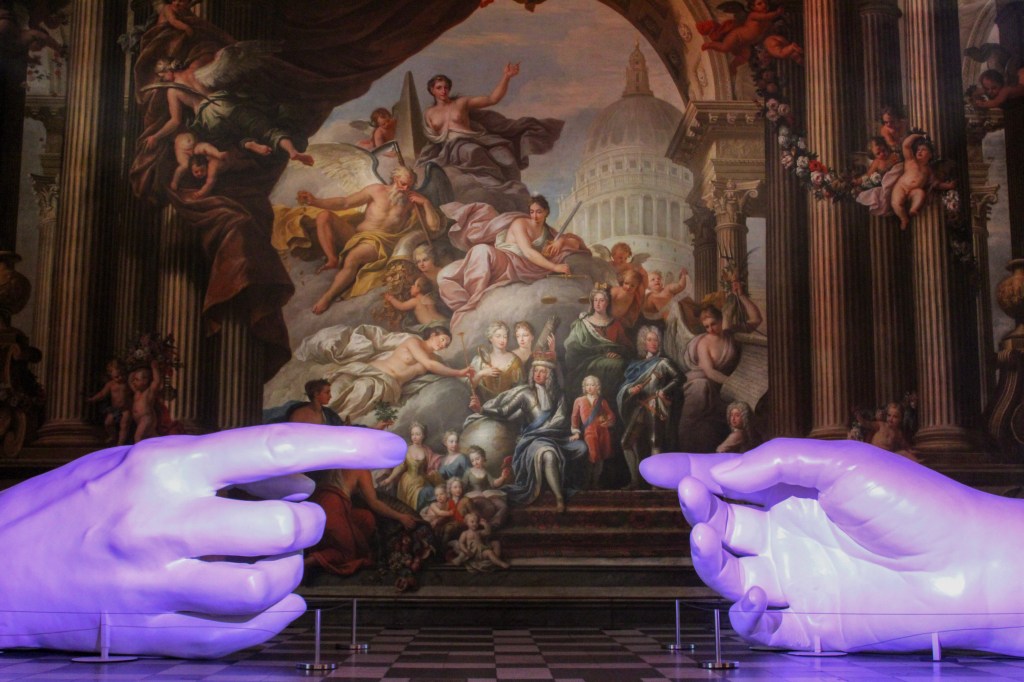
Identity centres on illuminated sculptural hands, inviting visitors to cast shadows and interact with the light. It creates brief moments of shared attention, but the interaction is fleeting. Once the novelty fades, there is little reason to stay.
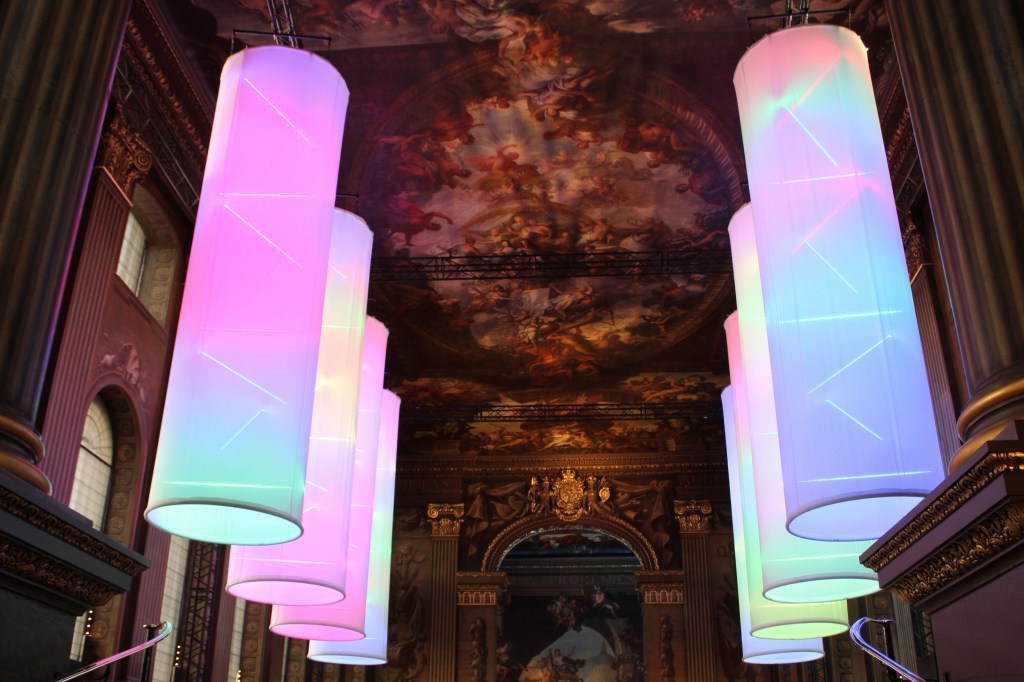
Connection consists of eight fabric cylinders fitted with LED strips, cycling through colour and a looping storm effect. From a distance, the installation frames the hall effectively. Up close, its purpose is harder to define. It gestures towards connection without fully realising it.
Large blocks of explanatory text accompany both installations, suggesting a lack of confidence in the work’s ability to communicate on its own. Music by David Harper is intended to shape the experience, but during our visit it was almost imperceptible.
There is a certain irony in encountering an exhibition concerned with connection during a tightly managed social media hour. While restricted numbers may be necessary, the structure sits uneasily alongside work intended to provoke reflection on selfhood and relationships.
A brief visit to the Queen’s House afterwards offered a useful contrast. With only a handful of visitors present, the space felt calm and unpressured. It highlighted how strongly the experience of Connection and Identity is shaped by its conditions rather than its content.
The exhibition raises a broader question about how contemporary work sits within historic spaces.
Here the issue is not ambition but scale.
The Painted Hall is already a complete experience. Anything placed within it needs to enhance that encounter, not compete with it.
As it stands, Connection and Identity is difficult to justify at the ticket price on its own.
For most visitors, the Painted Hall remains the real draw.
 Colin Cushion
Leave a comment