
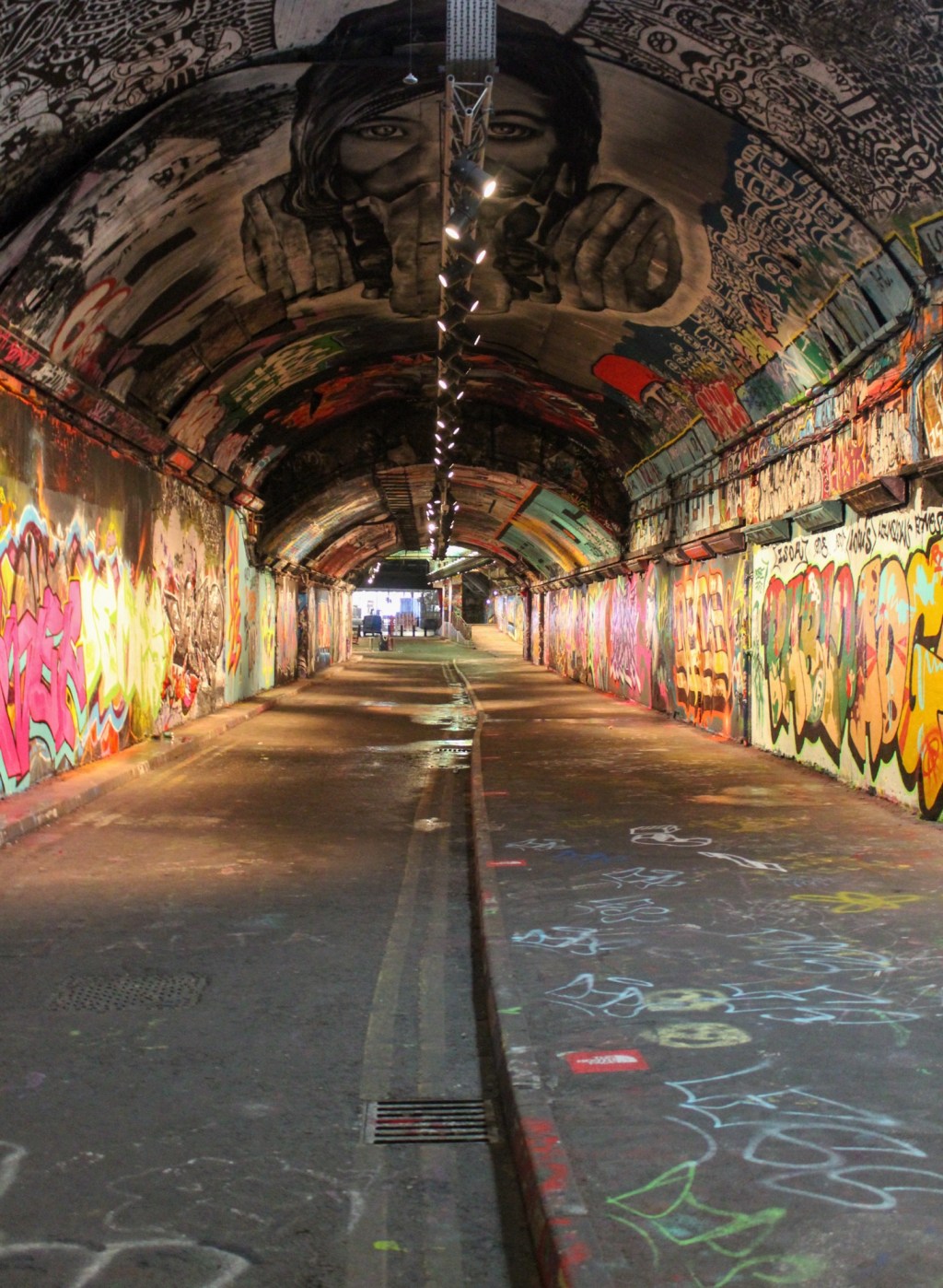
Leake Street Arches is a world of its own, each visitor passing briefly through a landscape that shifts by the hour.
The space can feel overwhelming at first. Trains rumble overhead beneath Waterloo Station while commuters move through the tunnel, the clatter of their shoes echoing against the concrete. Almost every inch is covered in paint, layers of colour and tags stacked over the work of those who came before.
Music spills from phones, speakers and nearby bars, drifting through a tunnel where daylight only reaches a few metres at either end.
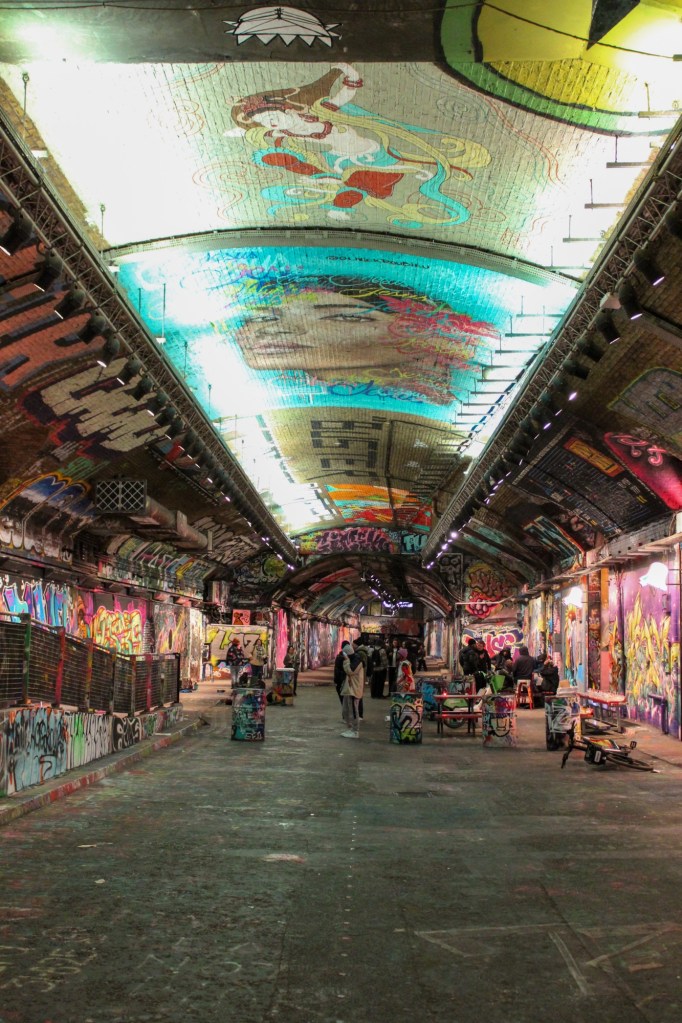
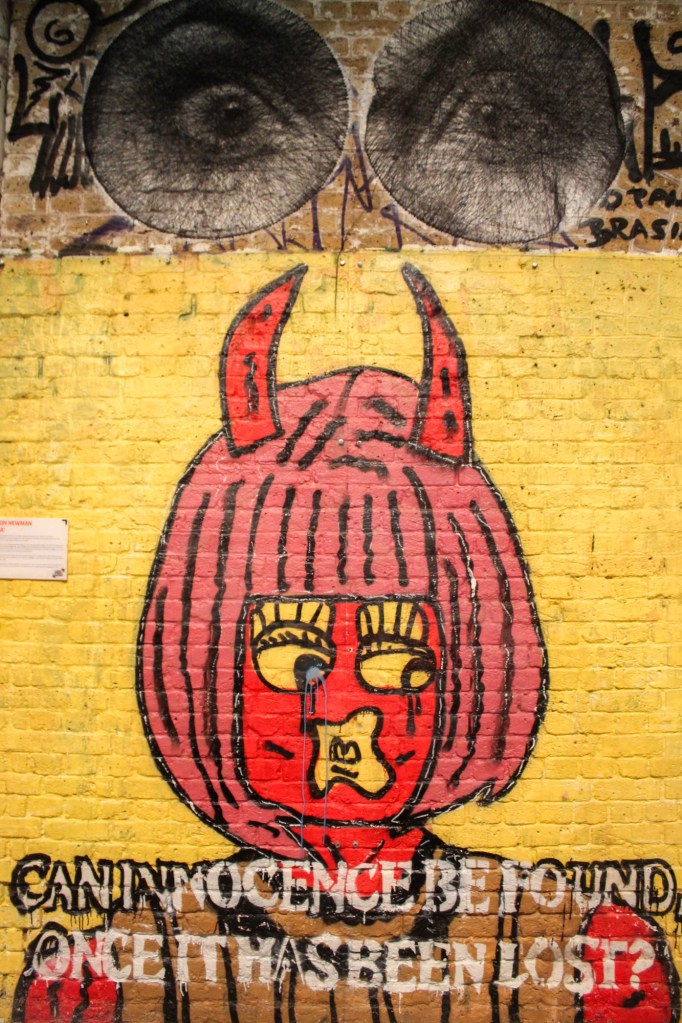
During two visits within the same 24-hour period, a large mural had already been replaced by a tag. Artists come and go, leaving their marks before someone else paints over them.
Sometimes the work carries meaning. Sometimes it is simply a name. A trace left behind.
That cycle can be traced back to the Cans Festival, organised by Banksy, when the tunnel was opened to graffiti artists from around the world. What began as a temporary project became a space that has never settled.
For artists, that freedom is part of the appeal. One graffiti writer, who goes by the name Dinglebericus, explains why he keeps returning.
“I come here because it’s a legal spot. You can chill. It’s easy. It’s safe for the most part if you’re painting during the day.”
Another artist, who paints under the name Wr0k, says the draw goes beyond access. For many, the tunnel has become a community.
“The community is really good. A lot of people come together, but a lot of the time you’re down here painting on your own.”
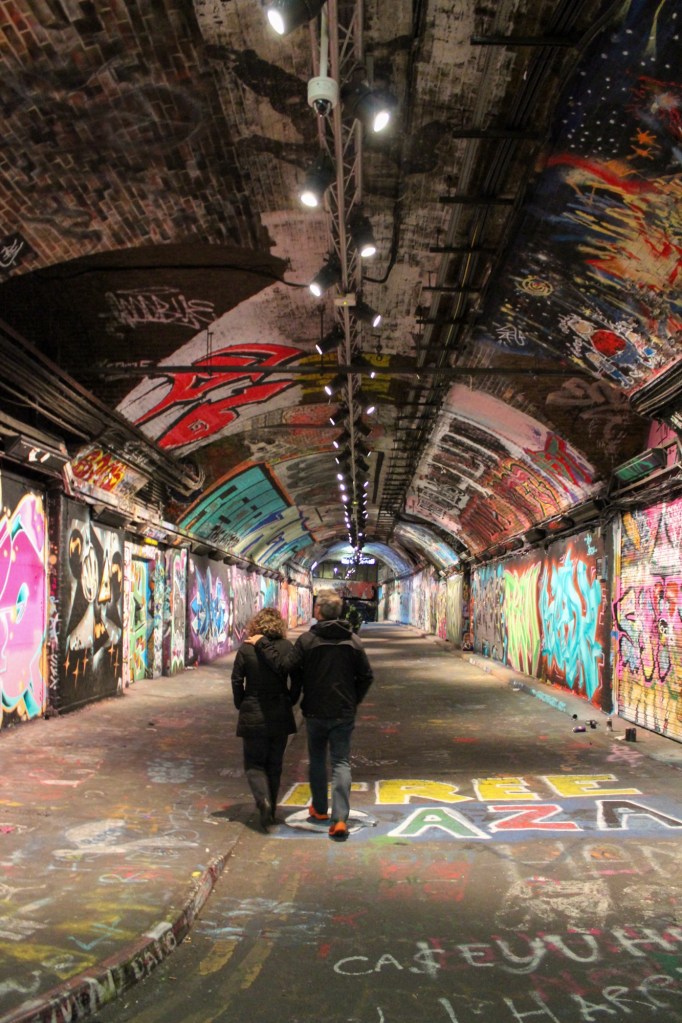
With every offshoot, corner and jagged edge there is something new to see. But behind the layers of paint sits a more complicated question. In a space where anyone can pick up a spray can, are there any rules at all?
Wr0k suggests that officially there are none.
“There’s really no rules at all. It’s just a legal spot where anyone can come and graffiti.”
But that freedom does not mean artists work without thought.
Dinglebericus describes a personal code.
“If I’m planning to paint a piece somewhere, I wouldn’t go over it if I know I can’t do as good or better. I’d just leave it and find another wall.”
Wr0k recalls finishing a piece, walking the length of the tunnel, and returning to find someone already painting over it.
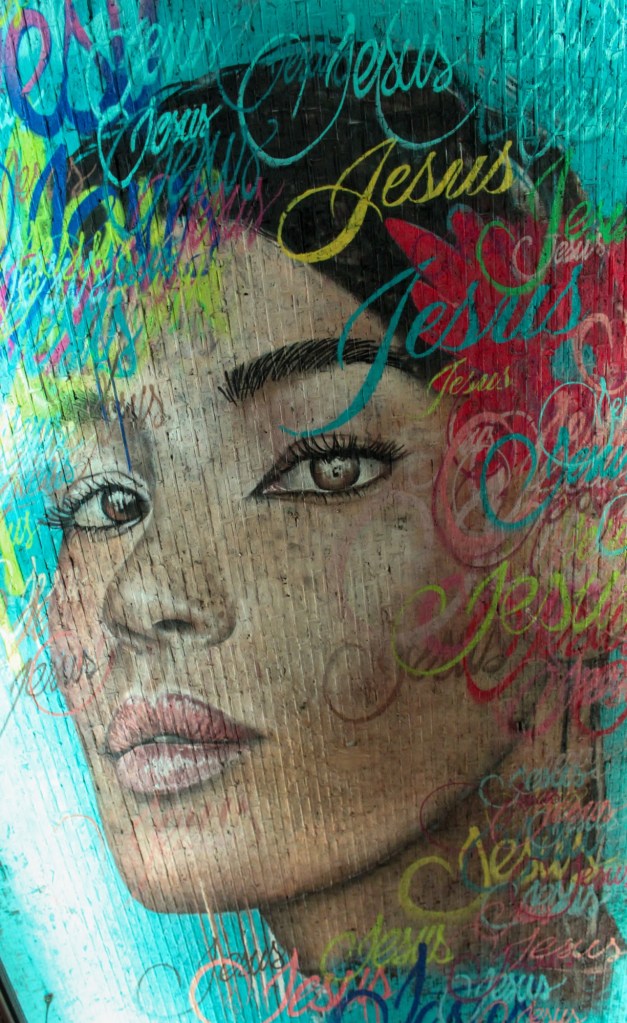
Beyond the artists, the space draws visitors from around the world. On one visit, a teacher accompanying a group of students from Denmark paused to take in the walls.
“This is almost always their favourite place in London.”
This year the students arrived prepared, adding their own marks to the surface.
Standing at the end of the arches, it becomes clear why artists return. The walls are never finished. The space is never complete.
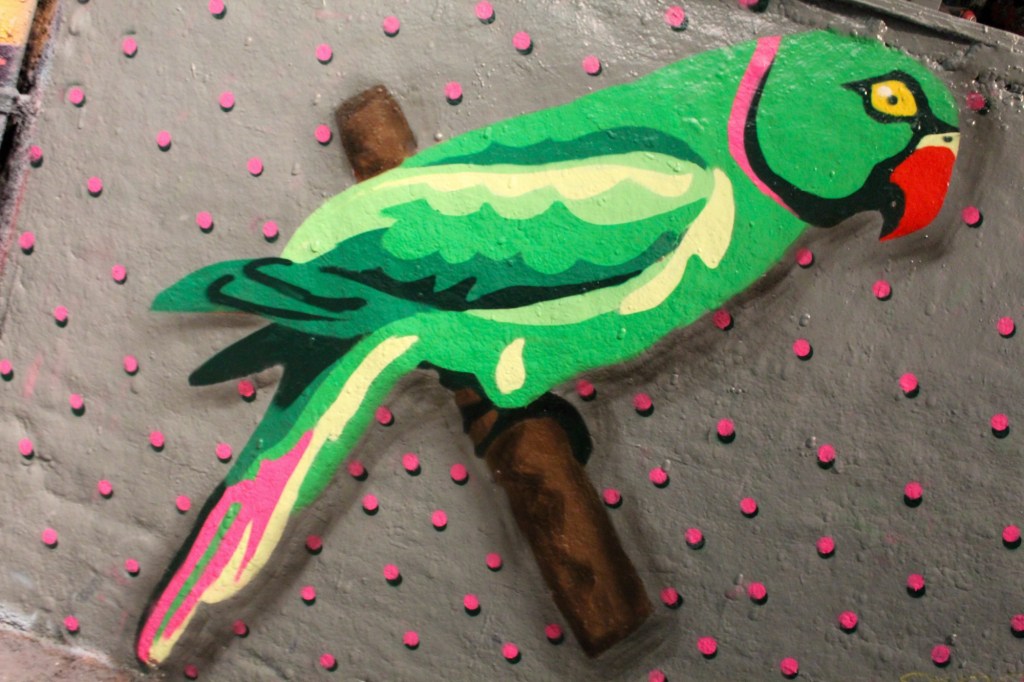
Every layer becomes part of an evolving archive beneath the city.
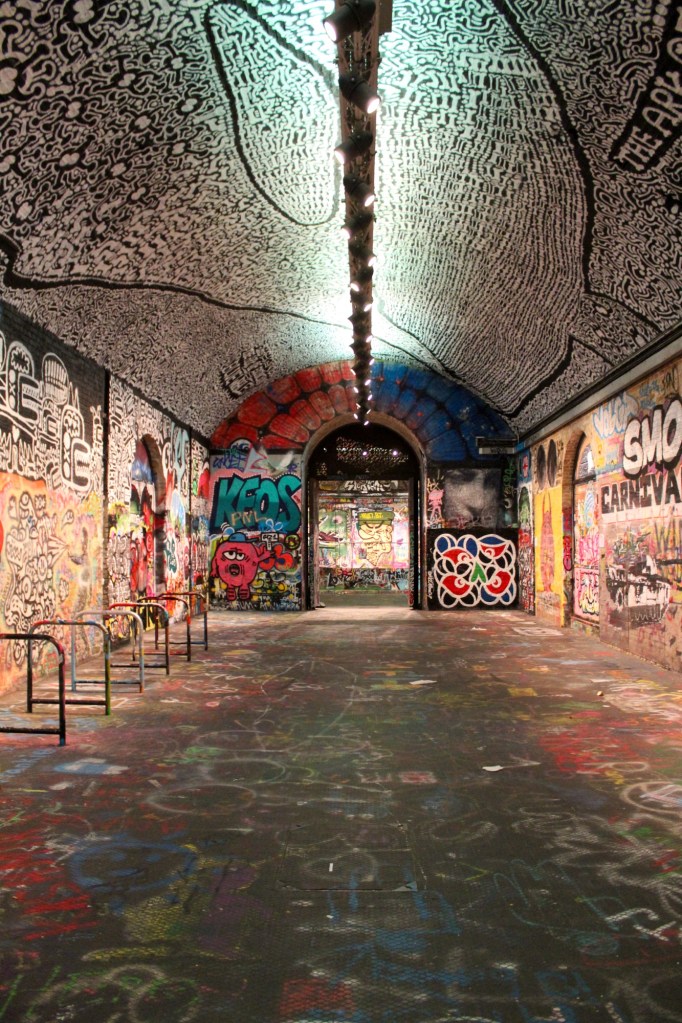
As I left the tunnel that evening, one artist stepped back from a freshly finished piece. For a moment, it stood untouched.
In the arches beneath Waterloo, moments like that rarely last.
 Colin Cushion
Leave a comment