

Going to the cinema now comes with a calculation. Is it worth the risk?
At the theatre, ushers patrol the aisles. They are visible, present, and ready to step in. In a cinema, that responsibility falls silently onto the audience.
If someone talks through key scenes, scrolls on their phone, or arrives nearly an hour late, the options are simple. Endure it, or leave your seat, navigate dark corridors, find staff, explain the disruption, and hope something happens. By the time you return, you have missed more than the interruption itself would have cost.
So most people endure it.
I did the thing I hate most. I complained on X. A very British response. Not confrontation. Not resolution. Just a public sigh.
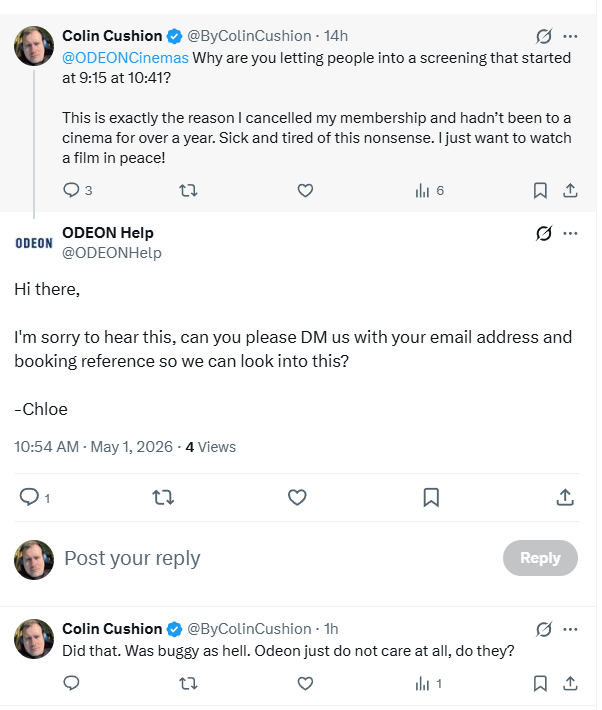
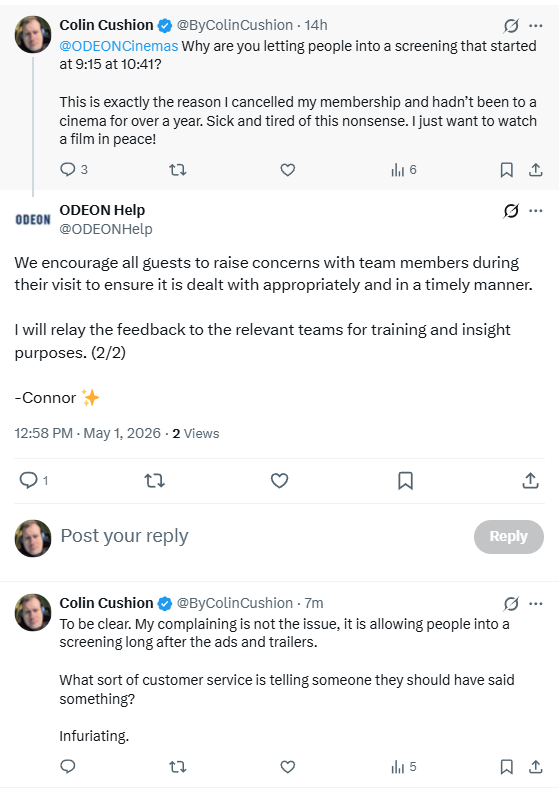
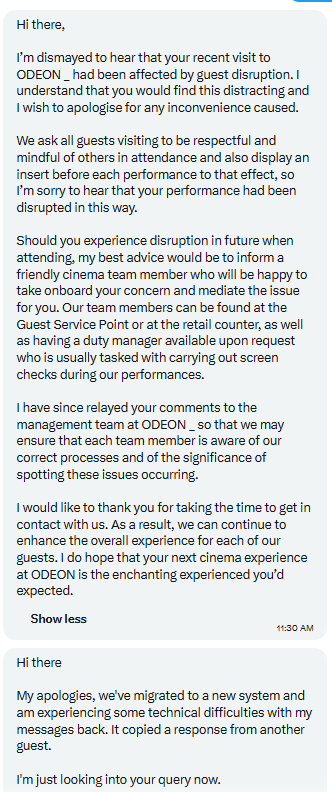
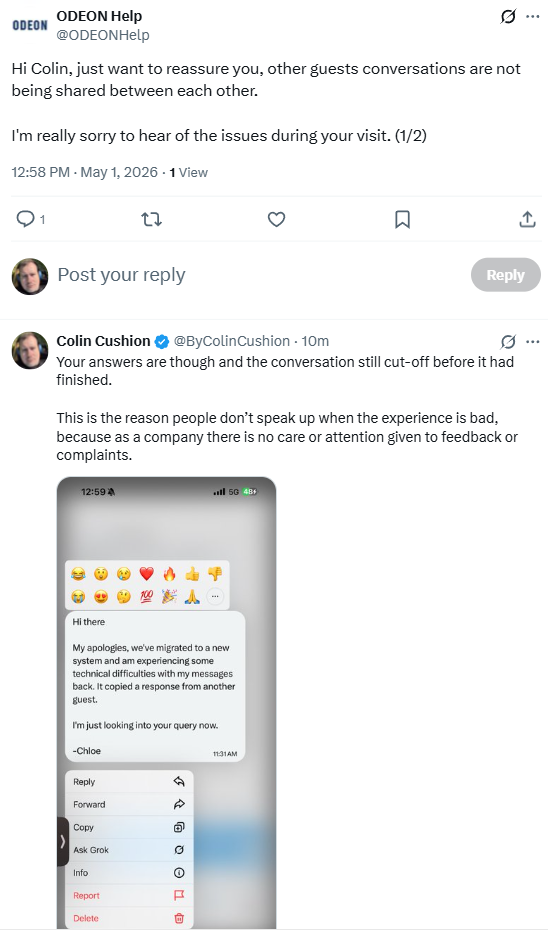
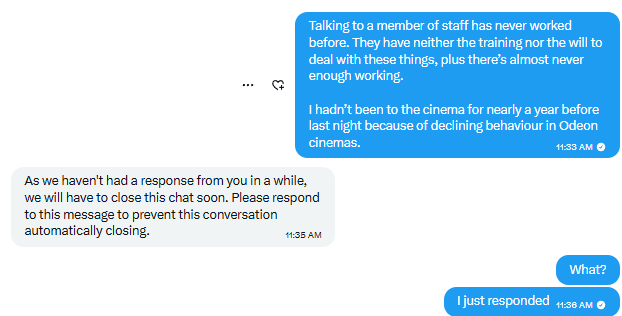
The replies were polite, sympathetic, and ineffective. I should have said something in the moment.
But there was no one to say it to.
Staff are rarely inside the screen. Confrontation with strangers in the dark is a risk most people won’t take. Cinemas still operate on trust at the door. That trust is fraying.
The larger failure is access. People are still being admitted long after a film has started.
This is not minor disruption. It breaks the central promise of cinema. For two hours, you disappear into another world. That only works when the space is protected.
Blaming audiences for not speaking up misses the point. Why should anyone sacrifice their seat and their experience because someone else refuses to follow basic rules?
The solution is not complicated.
It is 2026. A cinema app could include a discreet report disruption feature. One tap. No bright screen. Instant alert to staff. Phones helped create this problem. Used properly, they could help solve it.
Audiences are not asking for perfection.
Just the chance to watch a film without interruption.
Right now, even that feels out of reach.
And cinemas wonder why people stay home.
 Colin Cushion
Leave a comment