
From the muddy fields of Shoreditch to the velvet seats of Stratford, East London has shaped British theatre for centuries.
On an average night, around one hundred thousand people take their seats somewhere in the dark, part of the thirty seven million visits recorded by the Society of London Theatre and UK Theatre in just one year. They go to watch touring productions that criss cross the country or to sit inside one of roughly two hundred and forty theatres in London alone. Theatre starts conversations and sometimes it ends them too.
The industry has weathered more than four hundred and forty years of change since the first purpose built playhouses rose in the fields of Shoreditch. Theatre now thrives across the entire United Kingdom, but London holds the title of capital for a reason. What far fewer people realise is that East London, rather than the glittering stages of the West End, laid the foundations for how we attend, witness and enjoy theatre in the first place.
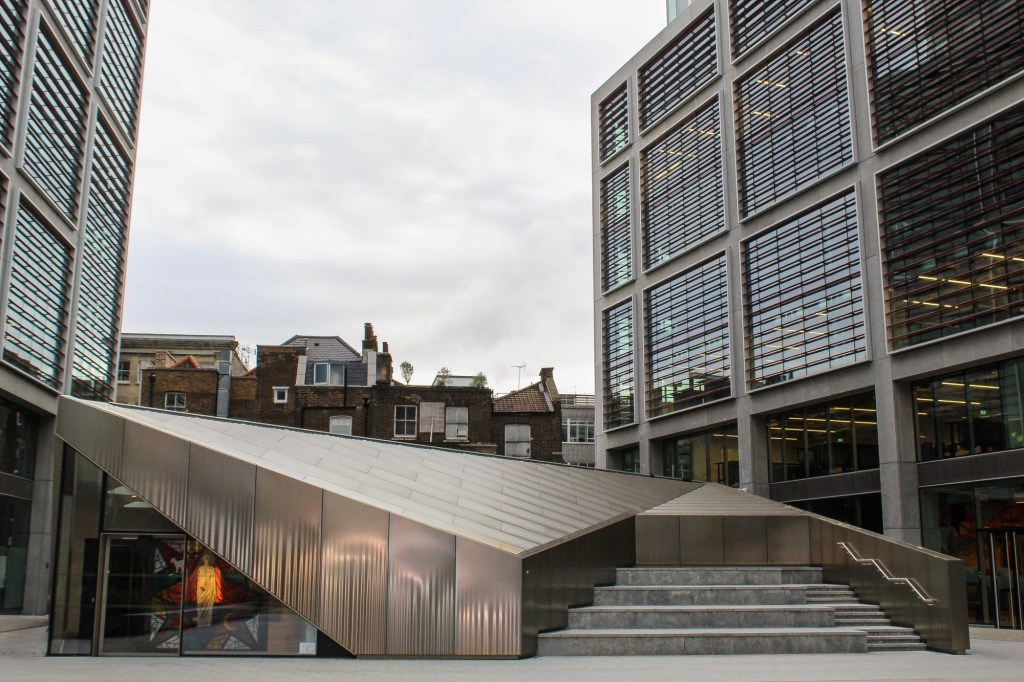
One afternoon I found myself standing in Shoreditch staring up at the metallic frame of the future Museum of Shakespeare. The offices around the shard like structure sat empty because the opening has been delayed until next year. There was a strange stillness in the air, as if the entire site was caught between centuries and waiting to wake up.
It struck me that this area has spent much of its life in moments like this. Shoreditch has always been a place that waits for the next crowd, the next performance, the next burst of life. The development is named The Stage, a neat nod to the history beneath its glass and steel. It was here that a wooden structure known simply as The Theatre once stood. This was the place where professional British theatre truly began.
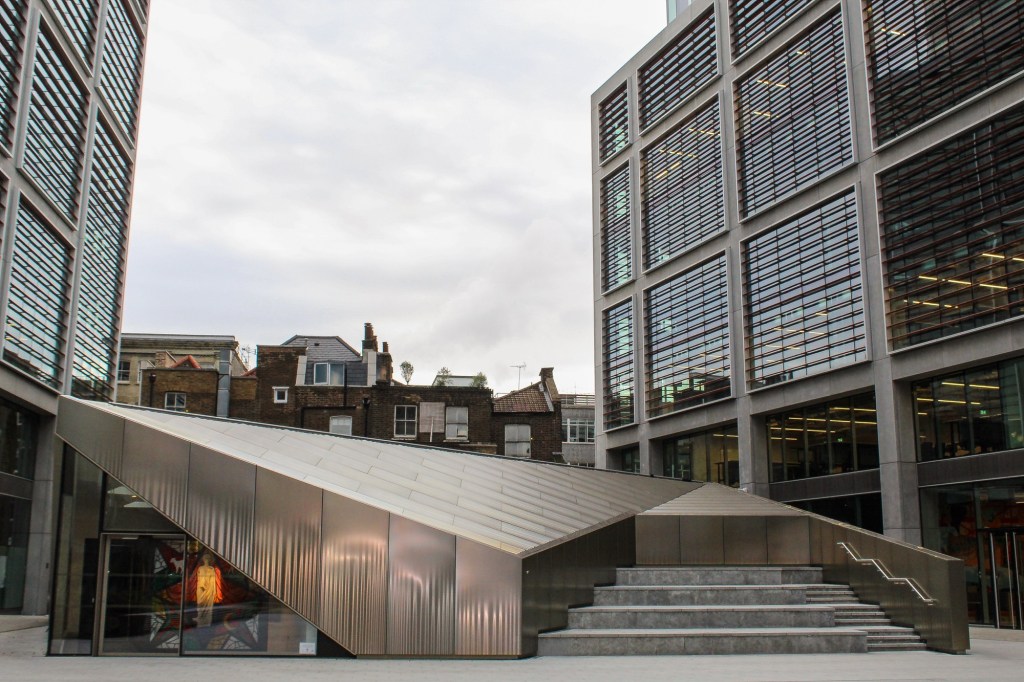
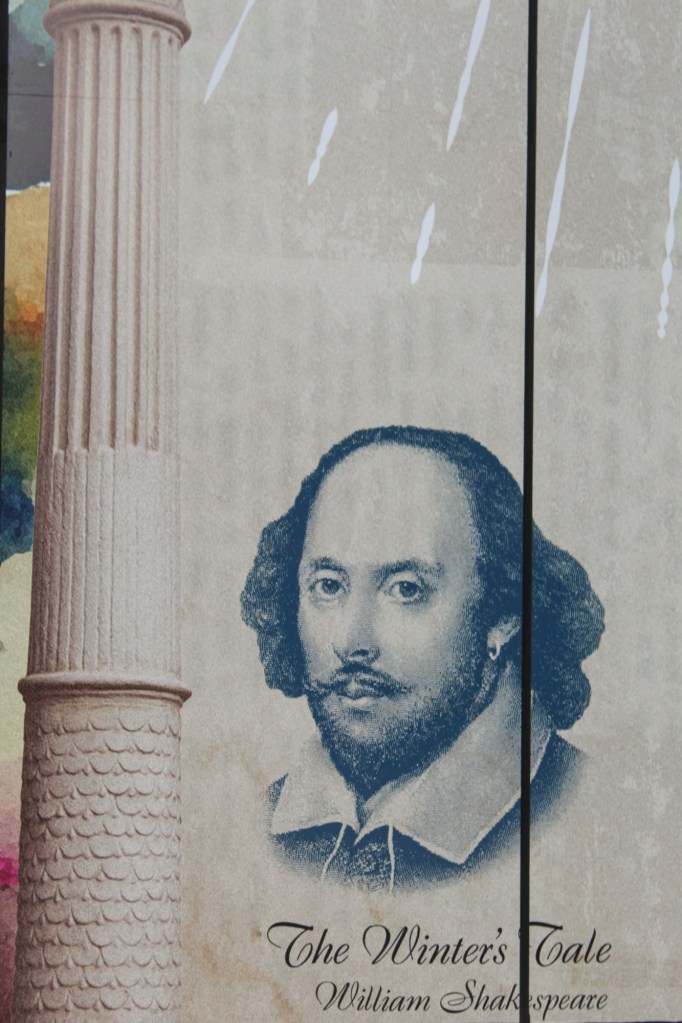
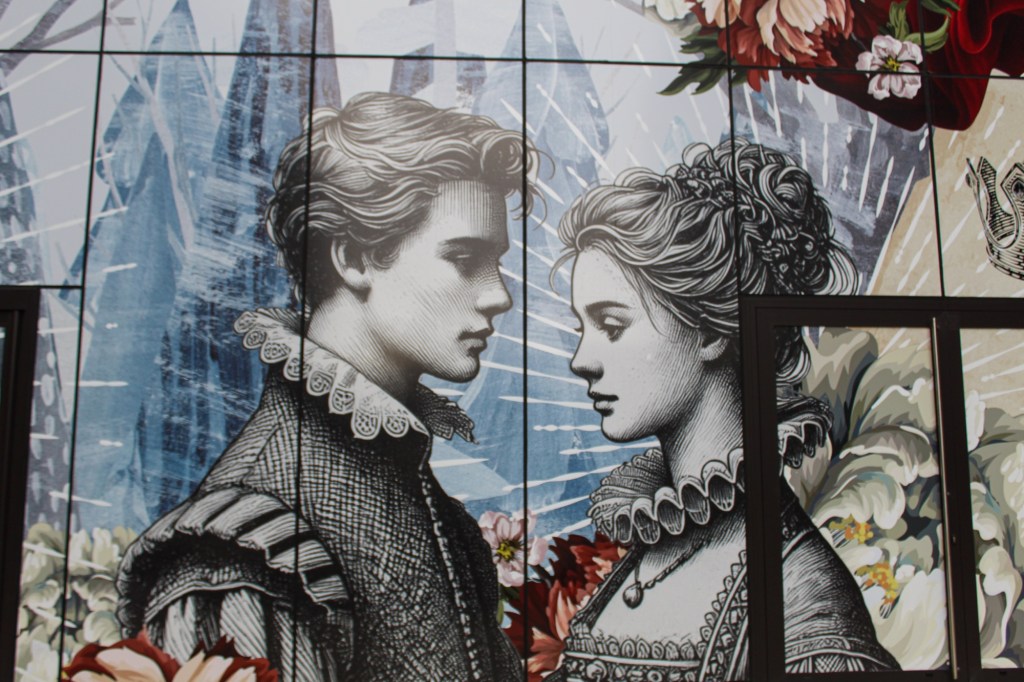
The future home of the Museum of Shakespeare, built on the site of The Theatre in Shoreditch, where professional British theatre began.
I wandered slowly across the open courtyard, the metallic slope of the new structure rising beside me, and tried to imagine the noise that would once have filled this ground. It feels almost poetic that the site has not seen a performance since 1598. That was the year The Theatre was dismantled and its timber carried across the Thames to build The Globe after a bitter dispute with the landlord.
Before The Theatre existed, plays were staged in courtyards, inn yards and halls. It is remarkable to picture actors weaving through crowded spaces, dodging jugs of ale and wandering animals while performing some of the earliest dramas known to English audiences.
Everything changed in 1576 when James Burbage, who had been both an actor and a joiner, created The Theatre to give the art form a permanent home. The idea of a building dedicated entirely to performance was bold and unfamiliar at the time, but it soon became the blueprint for every English speaking playhouse that followed.
Standing there, imagining those first audiences gathering beneath wooden beams, I felt a sudden rush of connection with the past. This quiet corner of Shoreditch once held applause before applause was even a common word.
The Theatre housed The Earl of Leicester’s Men and some historians believe Shakespeare may have performed or premiered work here, although the evidence is far from conclusive. Even so, the air carries a sense of possibility that he once crossed this ground.
Spectators enjoyed everything from religious morality plays to bawdy comedies and history dramas. They shouted, drank and lived the performances as much as they watched them. There were no fading houselights or polite silences. There was only daylight, raised voices and the raw exchange between actors and audience.
A short walk from the site stood The Curtain Theatre, built only a year later by Henry Lanman. Shoreditch was lively and full of taverns, workshops and lodgings. Actors moved freely between the two venues and the area soon became one of the earliest creative neighbourhoods in Britain.
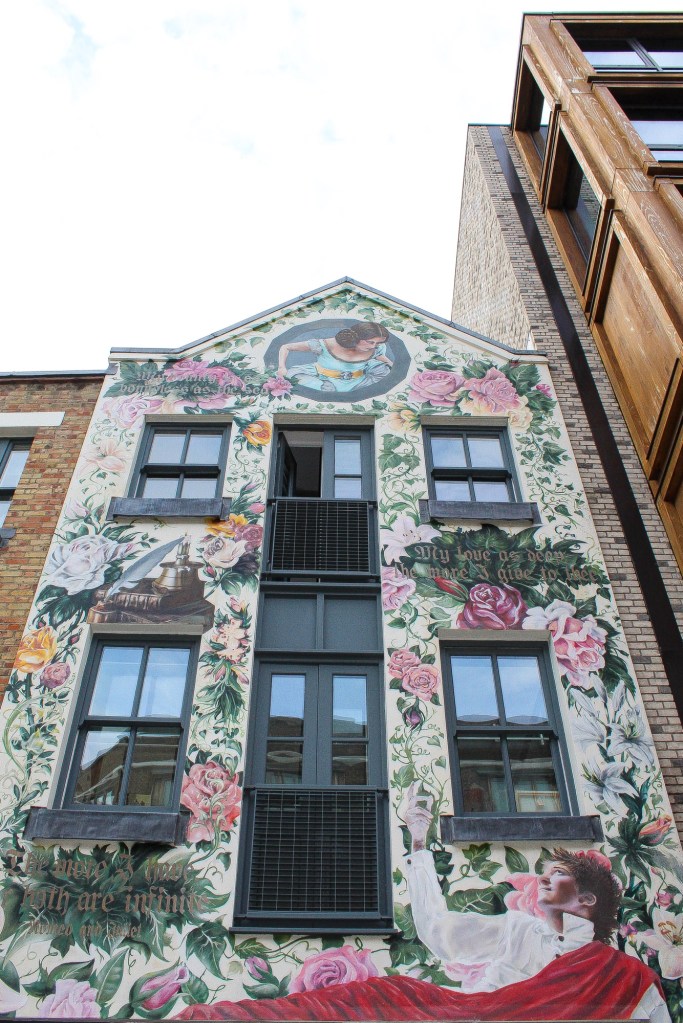
The site of The Curtain Theatre, where Shakespeare’s Romeo and Juliet and Henry V were once performed before the company moved south to The Globe.
The City and the Church hated all of it and tried repeatedly to shut the theatres down. They complained about crime, noise and moral decay, yet audiences returned again and again. When The Theatre finally closed, The Curtain became the home of Shakespeare’s company and even continued after The Globe opened.
As London expanded, crowds drifted south to Bankside and Shoreditch quietly stepped back into the shadows, keeping its history hidden beneath newer buildings.
Almost two centuries passed before East London saw another purpose built stage. The Civil War had closed every theatre in England and when the lights finally returned they shone mostly on the West End. The East had to make do with spectacle and song until the music halls rose from the pubs and parlours of the docks.
These early halls were lively, chaotic and crowded, offering a kind of performance that belonged entirely to the people who lived nearby.
Two hundred years later, the lights came back for real. Gas lamps and the clatter of glasses lit up Wilton’s Music Hall, which first opened in the eighteen fifties above an alehouse.
Finding Wilton’s took me a moment. The narrow alley that leads to it feels almost secret until the hall suddenly appears with its peeling paint and creaking galleries. It whispers stories of sailors, shopkeepers, factory workers and families who needed somewhere to laugh and breathe outside the weight of everyday life.
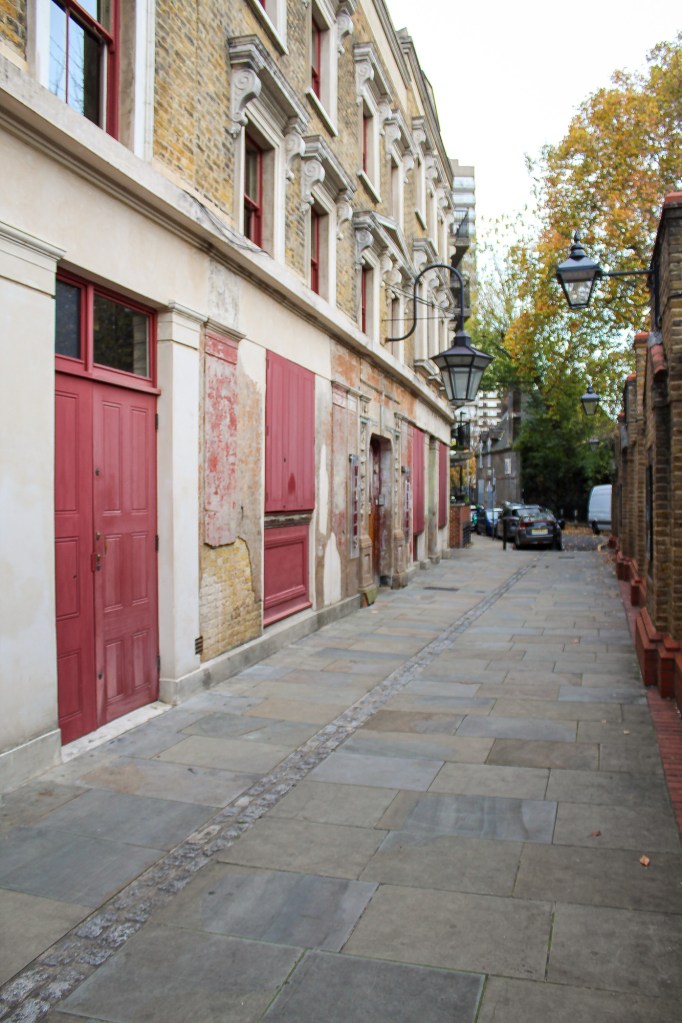
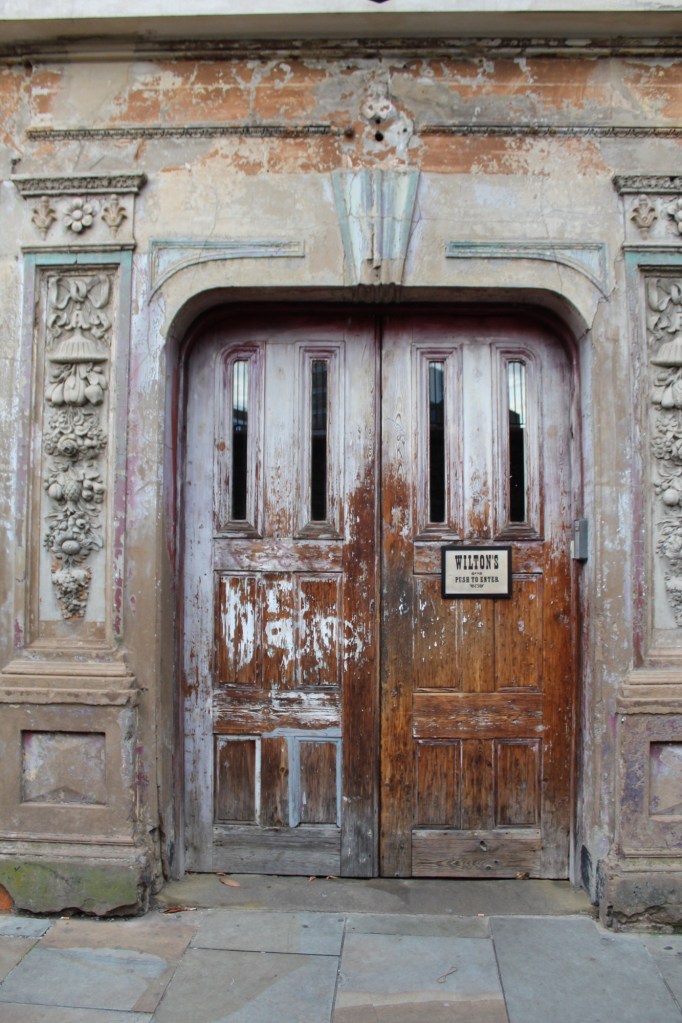
Wilton’s Music Hall off Cable Street, a rare survivor of the Victorian music hall boom and the beating heart of East End entertainment.
Music halls were the natural successor to the Tudor playhouses. They offered the same escape that earlier audiences had found in Shoreditch. They replaced daylight with lamplight and replaced religious stories with songs and comic turns, yet the spirit remained unchanged.
A few miles away in Hackney that East End spirit grew grander. Built in 1901 by theatre architect Frank Matcham, the Hackney Empire was designed to dazzle. Its red brick exterior and its marble and gold leaf interior drew crowds who expected brilliance.
Charlie Chaplin, Marie Lloyd, Stan Laurel and Oliver Hardy all performed here. It is easy to imagine queues curling around the building and the excitement of stepping into a palace of entertainment after a long working week.
What began in muddy fields had become marble and gilt. Yet despite its grandeur, the Empire carried the same heartbeat as The Theatre and Wilton’s. It existed for local people rather than for the elite.
Then came theatre’s greatest challenge. Television arrived and many halls either became cinemas or vanished altogether. Stratford, however, was determined to keep the story alive.
Joan Littlewood and her Theatre Workshop arrived at Theatre Royal Stratford East in 1953 and rebuilt it brick by brick. Littlewood wanted theatre for everyone. She wanted stories that reflected real life rather than polished fantasies.
Productions such as A Taste of Honey and Oh What a Lovely War proved that theatre could change with the times while still keeping its humanity.
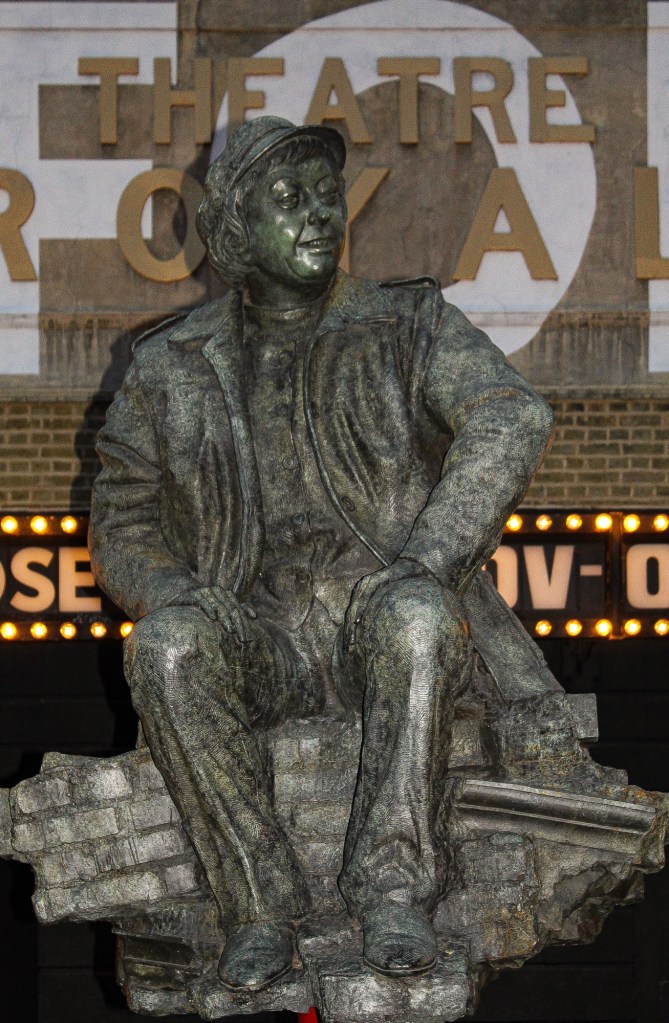
Joan Littlewood outside Theatre Royal Stratford East, the director who reshaped British theatre and returned it to the people.
Wrapped in faded velvet, Stratford East staged a revolution. Littlewood’s energy and her love for her community kept the old heartbeat alive in a new era. Outside, her statue stands as a reminder that the story was never over.
From the muddy fields of Shoreditch to the glow of Hackney and the velvet of Stratford, East London has shaped British theatre at every turn. The people who built, performed and laughed in these spaces did not do it for glory. They did it because they needed somewhere to belong, somewhere that reflected them, somewhere that felt alive.
Theatres evolve, collapse, rebuild and rise again just like the cities around them. With the Museum of Shakespeare set to open next year, the cycle begins again.
East London gave the world a way to tell its stories and, centuries later, it is still finding new ways to make itself heard.
 Colin Cushion
Leave a comment